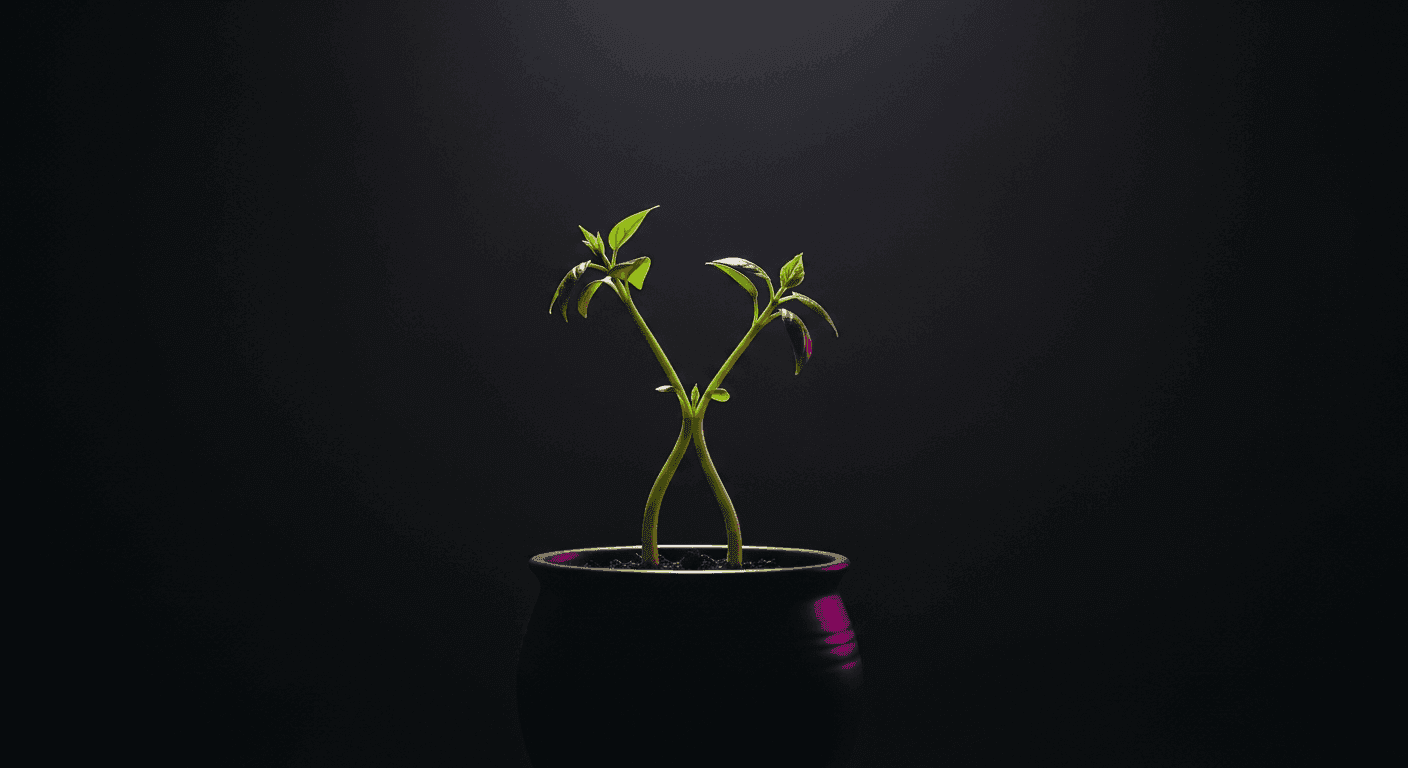
The myth of the finished person
We commit to a person as if signing off on a final version — then act surprised when updates arrive. New ambitions, new tastes, new fears, a different relationship with their own family: over any real stretch of years, you will be loved by, and have to love, several versions of the same person. That's not the fine print of long-term love. That's the deal itself.
How drift actually happens
Rarely through betrayal, usually through parallel processing. One partner starts a demanding job and grows in one direction; the other discovers a passion and grows in another. Both changes are healthy. What's missing is the bridge: nobody narrates their becoming to the other. Two people update silently for three years, then look up from their separate projects and find a polite stranger at the kitchen table.
The habits of couples who grow together
- They narrate the becoming. "I think I'm changing my mind about the city." "This new project is waking something up in me." Small announcements, made early — not grand reveals made after the decision.
- They stay curious past the resume. "What's exciting you lately?" asked in year seven with the same genuine interest as on date three. People stop sharing where nobody's asking.
- They keep one shared project alive. A garden, a savings goal, a trip being planned, a skill being failed at together. Parallel lives need at least one thing that's neither yours nor mine but ours.
- They renegotiate instead of resenting. When one grows into new needs, the couple's old agreements get updated out loud — not silently broken.
- They cheer, even when it's inconvenient. Her promotion means harder logistics; his new passion eats Saturdays. Growing couples treat each other's growth as good news first and a scheduling problem second — in that order.
The regular alignment check
Once or twice a year, over a long dinner or a long walk: where are we going — individually and together? What do the next few years look like in your head? Any dreams that changed? It feels almost too simple. So does a compass. Both keep travelers off the rocks.
The takeaway
You can't stop your partner from changing, and you shouldn't want to — the alternative to growth is not stability, it's decay. The only real choice is whether you change within sight of each other. Keep narrating, keep asking, keep one project shared. Grow loudly, together.